
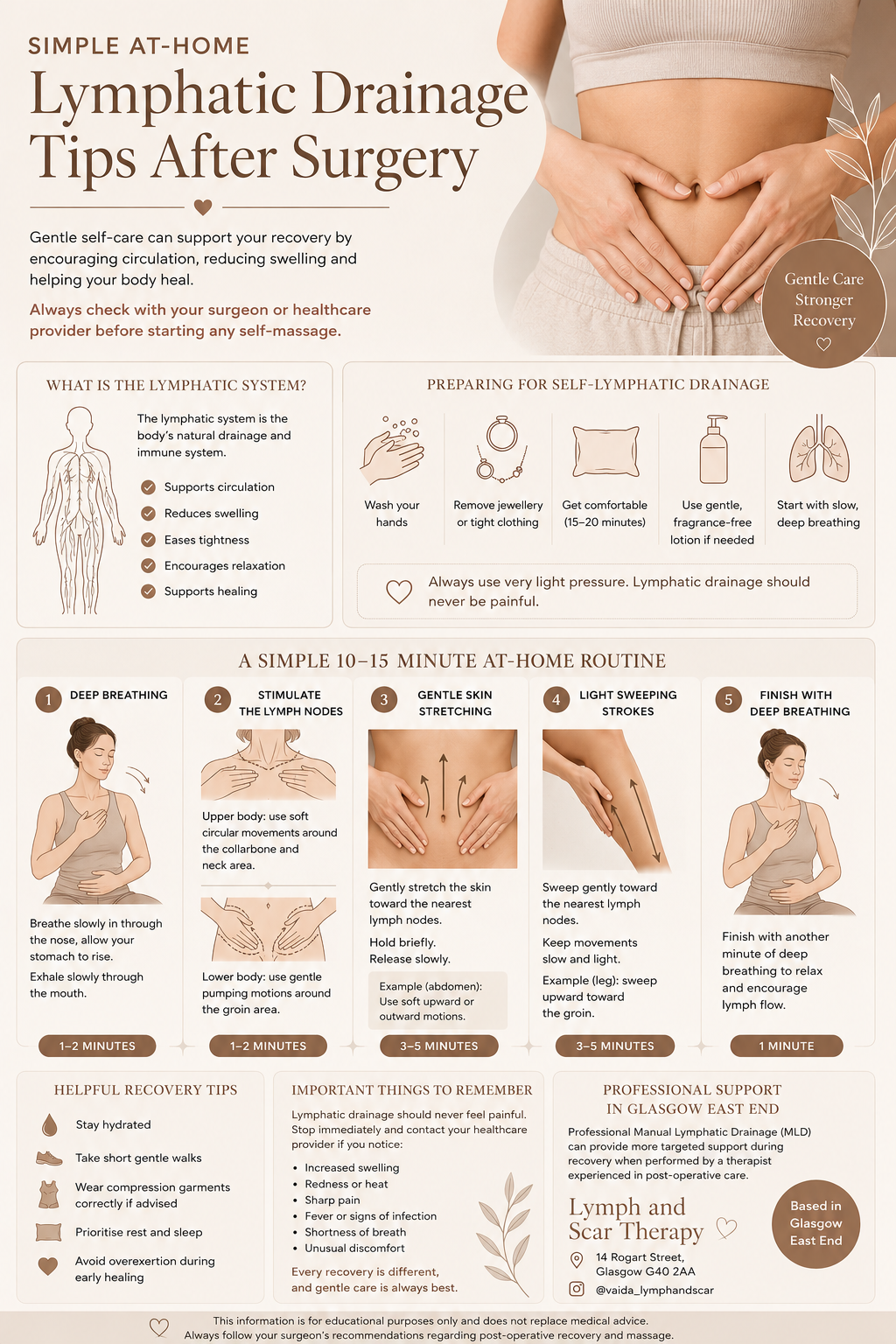
Recovering at home after surgery can feel physically and emotionally overwhelming. Swelling, tightness, bruising, and fluid retention are all common parts of healing, and many people look for gentle ways to support their recovery between professional treatments.
Simple at-home lymphatic drainage techniques may help encourage circulation, reduce feelings of heaviness, and support the body’s natural healing process when performed gently and correctly.
At-home care should always be gentle and should never replace medical advice or professional post-operative treatment. Before trying any self-massage techniques, always check with your surgeon or healthcare provider to make sure it is safe for your stage of healing.
What Is the Lymphatic System?
The lymphatic system is part of the body’s natural drainage and immune system. It helps move excess fluid, waste products, and toxins away from tissues and back into circulation.
After surgery, the body naturally creates inflammation and swelling as part of healing. Because the lymphatic system can temporarily become overwhelmed, fluid may build up around the treated area, leading to puffiness, heaviness, tightness, or discomfort.
Gentle lymphatic drainage techniques may help:
- Support circulation
- Reduce swelling and fluid retention
- Ease tightness and heaviness
- Encourage relaxation
- Support the body’s natural recovery process
Preparing for Self-Lymphatic Drainage
Before starting:
- Wash your hands thoroughly
- Remove jewellery or tight clothing
- Sit or lie somewhere comfortable where you can relax for 15–20 minutes
- If needed, apply a small amount of gentle fragrance-free lotion (avoid healing incisions unless approved by your surgeon)
- Begin with slow deep breathing for a few minutes to help relax the body and encourage lymphatic flow
A Simple Gentle Recovering At-Home After Surgery Routine
This routine is designed to be calm, slow, and gentle. The entire process should take approximately 10–15 minutes.
Step 1 – Deep Breathing (1–2 Minutes)
Deep breathing helps stimulate the lymphatic system naturally.
- Breathe slowly in through the nose
- Allow the stomach to gently rise
- Exhale slowly through the mouth
Repeat slowly for 1–2 minutes.
Step 2 – Stimulate the Lymph Nodes (1–2 Minutes)
It is important to begin by gently activating the lymph nodes before working near swollen areas.
For upper body recovery:
- Use soft circular movements around the collarbone and neck area
For lower body recovery:
- Use gentle pumping motions around the groin area
Use only extremely light pressure and repeat slowly 5–10 times.
Step 3 – Gentle Skin Stretching (3–5 Minutes)
Using flat hands or fingertips:
- Gently stretch the skin toward the nearest lymph node area
- Hold briefly
- Release slowly
Examples:
- Arms → move gently toward the armpits
- Legs → move upward toward the groin
- Abdomen → use soft upward or outward motions if advised by your surgeon
The pressure should always remain very light and comfortable.
Step 4 – Light Sweeping Strokes (3–5 Minutes)
Using relaxed hands:
- Sweep gently toward the nearest lymph nodes
- Keep movements slow and light
- Avoid deep or firm pressure
Repeat each movement several times before moving to the next area.
Step 5 – Finish with Deep Breathing (1 Minute)
Finish the routine with another minute of slow breathing to help relax the body and nervous system.
Helpful Recovery Tips for recovering at home
Alongside gentle lymphatic drainage, you may also benefit from:
- Staying hydrated
- Taking short gentle walks
- Wearing compression garments correctly if advised
- Prioritising rest and sleep
- Avoiding overexertion during early healing
Consistency and gentle care are usually more helpful than doing too much too soon.
Important Things to Remember
Lymphatic drainage should never feel painful.
Stop immediately and contact your healthcare provider if you notice:
- Increased swelling
- Redness or heat
- Sharp pain
- Fever or signs of infection
- Shortness of breath
- Unusual discomfort
Every recovery is different, and gentle care is always best.
Professional Post-Operative Support in Glasgow East End
Professional Manual Lymphatic Drainage (MLD) can provide more targeted support during recovery when performed by a therapist experienced in post-operative care.
If you would like professional support during your recovery, treatments are available at:
Lymph and Scar Therapy
14 Rogart Street, Glasgow G40 2AA
Based in Glasgow East End.
Instagram:
@vaida_lymphandscar
Disclaimer
This article is for educational purposes only and does not replace medical advice. Always follow your surgeon’s recommendations regarding post-operative recovery and massage.

